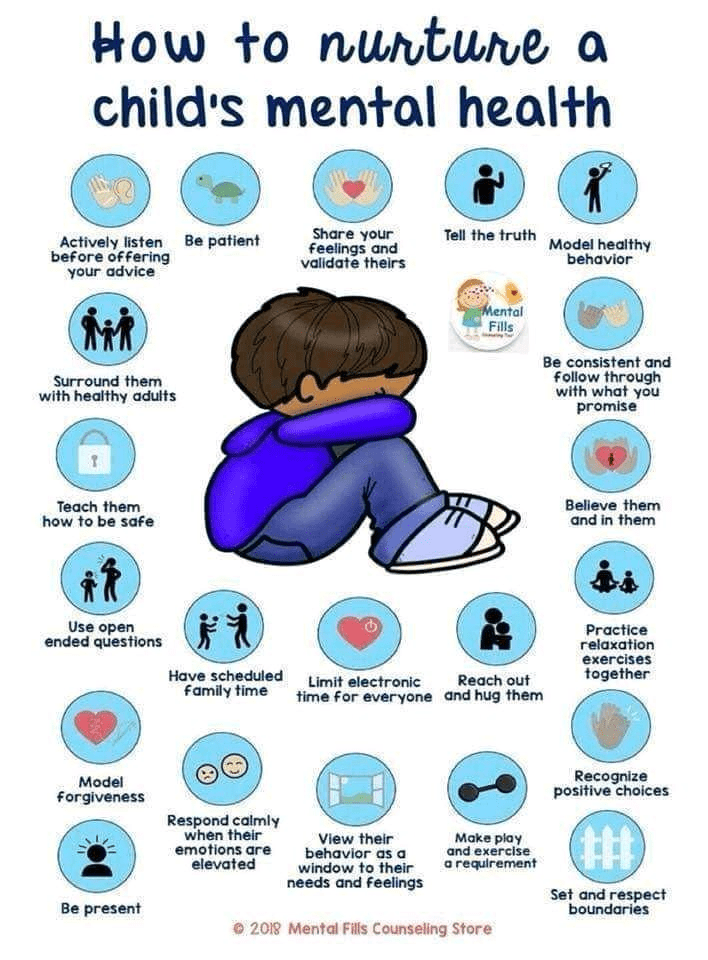
Nurturing a child’s mental health begins with everyday relationships built on trust, patience, and presence. Children thrive when adults actively listen, validate their feelings, and respond calmly, even during emotional moments. Honest communication, consistent follow-through, and respectful boundaries create a sense of safety and predictability. Positive role-modelling—of forgiveness, healthy behaviour, and self-regulation—teaches children how to manage their own emotions. Limiting excessive screen time, encouraging play, exercise, and relaxation, and spending regular family time strengthen emotional bonds.
Message
Above all, believing children, recognising their positive choices, and surrounding them with caring adults helps them feel valued, secure, and resilient.
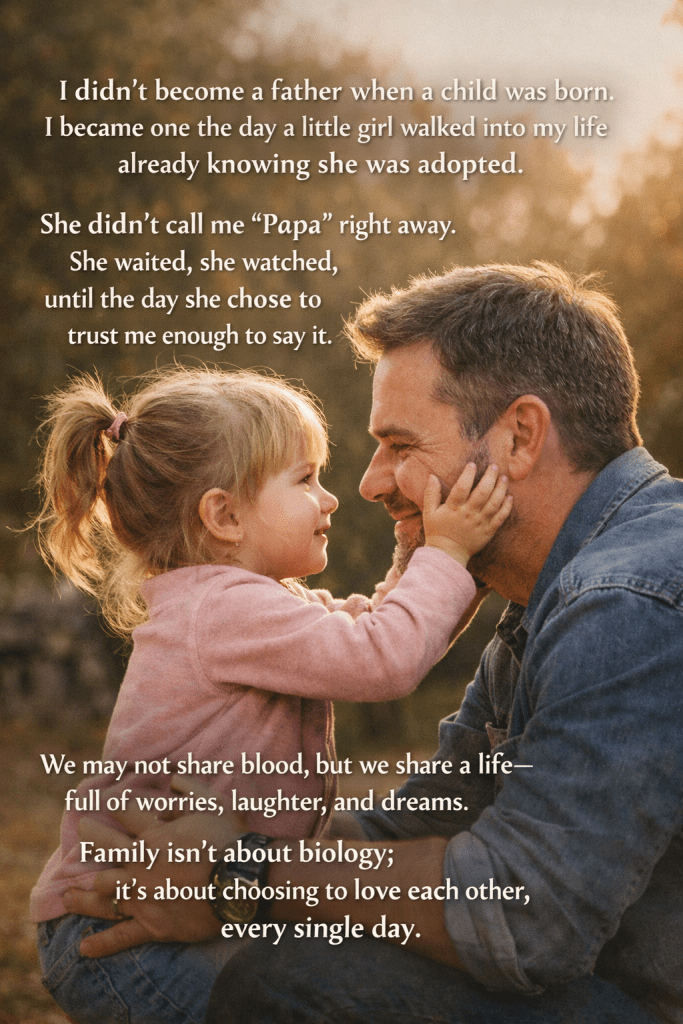
I did not become a father at the moment a child was born. I became one on the day a child entered my life, already aware that she was adopted. She came with her own memories, understanding, and unspoken questions—each deserving honesty and respect, never avoidance. From the very start, I knew my responsibility was not to erase her history, but to support her as she shaped her present and stepped into her future.
For us, adoption was never about secrecy or duty. It was about responsibility and choice. Love did not arrive suddenly or effortlessly; it grew gradually through patience, consistency, and trust. I learned that fatherhood is not defined by control or authority, but by reliability—by staying present, especially when reassurance is needed most.
She did not call me Papa for a long time. She was nearly four years old when she was adopted, old enough to observe, to test, and to wait. When she finally chose that word, it was because she felt safe enough to believe I would remain. That moment mattered more than any legal recognition or paperwork ever could. It was proof that love had taken hold.
Message
We may not share blood, but we share life—its routines, worries, laughter, and dreams. And through this shared journey, I have learned that families are not formed by biology alone, but by choosing one another, every single day, with care and commitment.
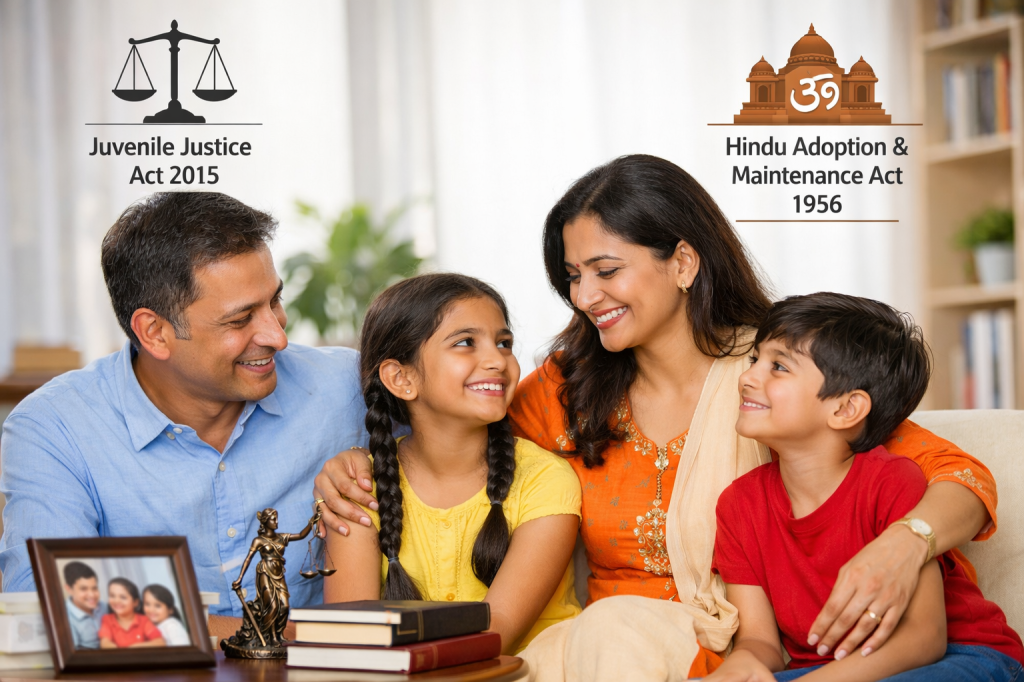
In India, stepchild adoption is considered a family adoption because it integrates the child into an existing family structure, preserves familial bonds, ensures legal and emotional security, and prioritises the child’s best interests. India recognises stepchild adoption through two distinct legal pathways: the Juvenile Justice (Care and Protection of Children) Act, 2015, a secular law, and the Hindu Adoption and Maintenance Act, 1956, a personal law for Hindus. Behind these statutes lie real families seeking stability, belonging, and legal certainty for children growing up in blended households.
Consider a child who has lived for years with a biological parent and a caring step-parent after divorce or widowhood. Emotionally, the child already belongs to this new family. Yet, without legal adoption, questions of guardianship, inheritance, and decision-making remain unresolved. Indian law offers solutions. The Juvenile Justice Act lays a procedure and provides a child-centric, secular framework applicable to all citizens, ensuring that adoption serves the best interests of the child above all else. Alongside this, the Hindu Adoption and Maintenance Act allows Hindu families to formalise stepchild adoption within their personal law framework which is automatic, recognising the adoptive relationship as equivalent to a biological one. Together, these laws reflect India’s attempt to balance family autonomy, parental rights, and the child’s welfare. For more information one may access information from the website of CARA, the nodal adoption body in the country.
Message
While procedures may differ, the objective remains the same: to give a child not just a home, but a legally secure identity within the family they already call their own.
Compassion and empathy are complementary qualities that together form the ethical and emotional foundation of effective social work with children. Empathy enables social workers to understand a child’s emotions, experiences, and perspectives, especially in cases involving trauma, neglect, disability, or separation from family. By recognising what a child feels and why they feel that way, social workers can build trust, ensure emotional safety, and give genuine space to the child’s voice.
Compassion extends this understanding into deliberate and responsible action. It reflects the commitment to respond to a child’s needs through protection, care, and long-term rehabilitation. Compassion drives interventions such as medical support, therapy, education, and placement in family-based care, while also guiding difficult decisions that prioritise the child’s best interests over convenience or delay.
When empathy exists without compassion, support may remain emotionally sensitive but ineffective. When compassion operates without empathy, interventions risk becoming procedural or detached. Used together, empathy informs understanding and compassion ensures action. This balance allows social workers to remain emotionally connected without losing professional judgment.
Message
By integrating empathy with compassion, child-centred practice becomes both humane and effective, ensuring that children receive not only understanding but also meaningful care, protection, and opportunities for healing and development.
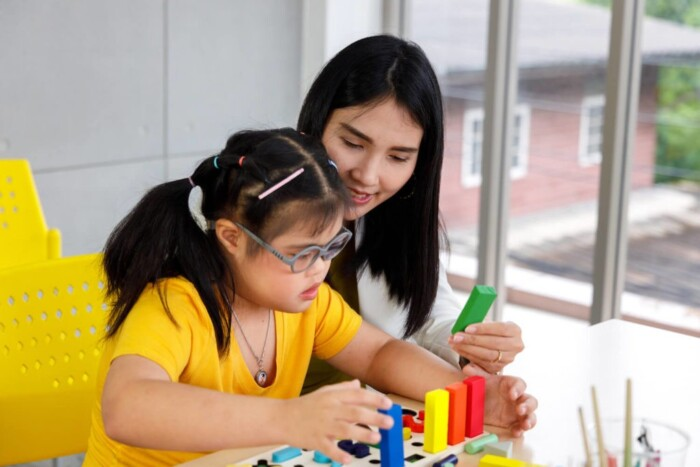
Children with special needs in institutional care require focused and individualized attention due to a variety of physical, cognitive, and medical conditions. Observations from several homes across the country reveal children living with Down Syndrome, cerebral palsy, developmental delays, delayed motor and mental milestones, macrocephaly, microcephaly, and spasticity. Many children face visual impairments, ranging from partial to complete blindness, and ocular conditions such as retinal disease or squint. Hearing impairments, including partial or severe hearing loss, as well as children who are deaf-mute, are also common.
Several children require medical supervision for congenital or chronic conditions such as heart defects, cleft palate, obstructive hydrocephalus, Lumbal Meningomyelocele, thalassemia, congenital Talipes, and arthrogryposis. Some are HIV-positive or have other serious health concerns, while others were born prematurely, underweight, or with delayed development.
Message
Providing appropriate care involves continuous medical intervention, physiotherapy, speech and occupational therapy, special education, nutritional support, and psychosocial care. Institutional caregivers must adopt individualized care plans to ensure these children reach their fullest potential, remain healthy, and are prepared for integration into family-based or foster care whenever possible.
Specially abled children living in child care institutions often enter care due to abandonment, poverty, disability-related stigma, or the inability of families to provide sustained support. While these children are entitled to comprehensive care, protection, and inclusion, institutional environments frequently face constraints such as limited specialised training among caregivers, frequent staff changes, structured routines, and minimal opportunities for individualised engagement. These challenges can significantly affect children with intellectual, sensory, communication, or multiple disabilities—many of whom remain withdrawn or unable to express their needs through conventional verbal or behavioural means.
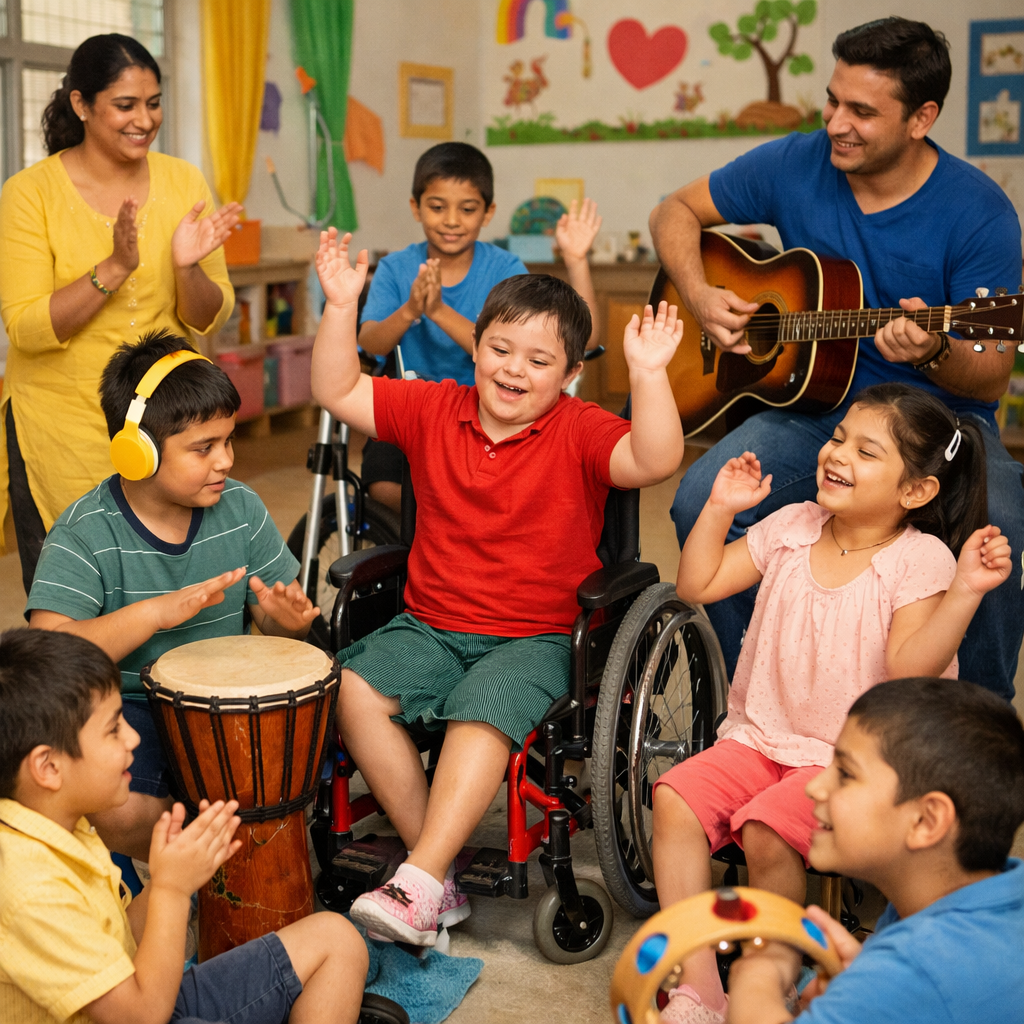
Experiential observations from children’s homes indicate that music and dance can serve as powerful, non-verbal mediums of engagement for specially abled children. Simple rhythms, repetitive movements, familiar sounds, and syllabic patterns enable participation regardless of speech, cognitive level, or motor limitations. Children with speech and language delays, autism spectrum conditions, hearing impairments, or motor difficulties often show improved attention, emotional expression, and social interaction during music and movement activities.
Music and dance provide safe, predictable, and emotionally regulating experiences that help build trust and reduce anxiety. Their intrinsically motivating nature encourages participation without coercion, acting as natural reinforcers for positive responses. Therapeutically, these activities support sensory integration, motor coordination, emotional regulation, and self-esteem, making them essential components of inclusive care, rehabilitation, and holistic development for specially abled children in institutional settings.
Message
In India, most childcare institutions accommodate at least a few children with special needs. Given the limited number of specialised facilities, it is important for every CCI to incorporate inclusive, low-cost interventions, such as music and movement activities, to support the developmental and emotional needs of these children.
Child safeguarding, child protection audits, and social audits—although they may appear similar—serve distinct but complementary functions within the functioning of a Child Care Institution (CCI). Together, these three mechanisms—safeguarding, protection audits, and social audits—create a comprehensive framework that strengthens child protection and promotes a safe, nurturing, and accountable care environment. Child safeguarding primarily relates to the responsibilities of organizations where children interact with adults, peers, and systems. These include Child Care Institutions (CCIs), schools, NGOs, faith-based organizations, sports bodies, and healthcare facilities. Safeguarding focuses on creating safe environments by ensuring that organizational structures, policies, staff conduct, and operational practices do not expose children to harm. A key feature of child safeguarding is internal accountability. Organizations are expected to establish clear reporting channels, standard operating procedures, and designated safeguarding personnel to ensure timely and appropriate responses to concerns, without relying solely on external authorities. In contrast, child protection refers to the broader, state-led framework encompassing laws, statutory institutions, and response mechanisms designed to address abuse, neglect, exploitation, and violence against children across society. Social audit plays a critical role in linking child safeguarding and child protection. As a proactive tool, it examines whether safeguarding commitments are effectively implemented and understood by staff and children. Simultaneously, it assesses compliance with child protection laws such as the Juvenile Justice Act, POCSO Act and various other progressive legislations. By reviewing both preventive measures and statutory obligations, social audit strengthens organizational accountability and reinforces the broader child protection system, ensuring children’s safety, dignity, and rights are upheld in practice. Share this:
A significant number of adoptions carried out under the Hindu Adoption and Maintenance Act (HAMA), 1956 remain largely invisible to India’s formal child protection system. These adoptions often occur through private or intra-family arrangements, shaped by long-standing social practices, limited awareness of procedural safeguards, reluctance to engage with institutional mechanisms, and the absence of any mandatory centralised reporting or registry. Although such adoptions may be legally valid under HAMA, they frequently take place without systematic documentation, independent verification of the child’s circumstances, or linkage with child protection authorities.
Most HAMA adoptions involve relatives and are rooted in cultural traditions that pre-date contemporary child protection frameworks. While relative adoption does not necessarily involve complete separation from the biological family, it is nonetheless critical to safeguard the rights and best interests of the child. In many cases, children adopted under HAMA are not orphans, and informal processes can obscure their legal identity and entitlements. Inadequate documentation may later result in serious challenges related to proof of identity, inheritance and succession rights, citizenship status, and access to education, health care, and social welfare benefits.
The invisibility of HAMA adoptions also weakens accountability and limits the State’s ability to monitor adoption practices, detect coercion or financial inducements, and plan evidence-based child welfare interventions. Family disputes over custody or property may further place the child at risk. Strengthening reporting mechanisms, standardising documentation, and establishing a central registry—while respecting the cultural and legal foundations of HAMA—is essential to ensure protection, transparency, and long-term security for children.
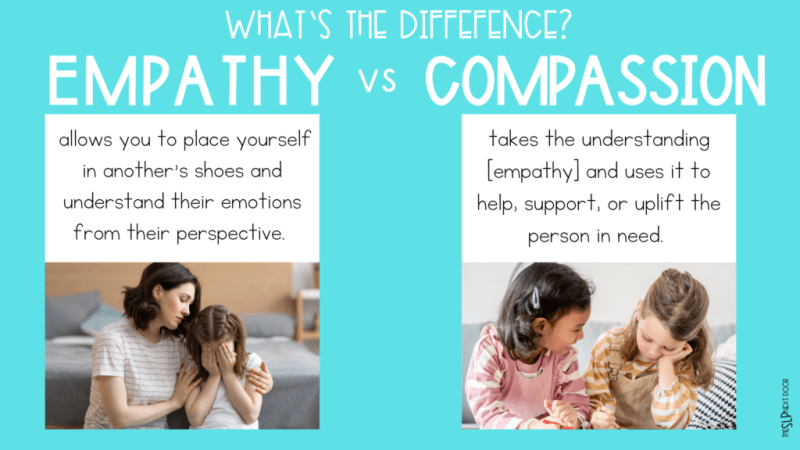
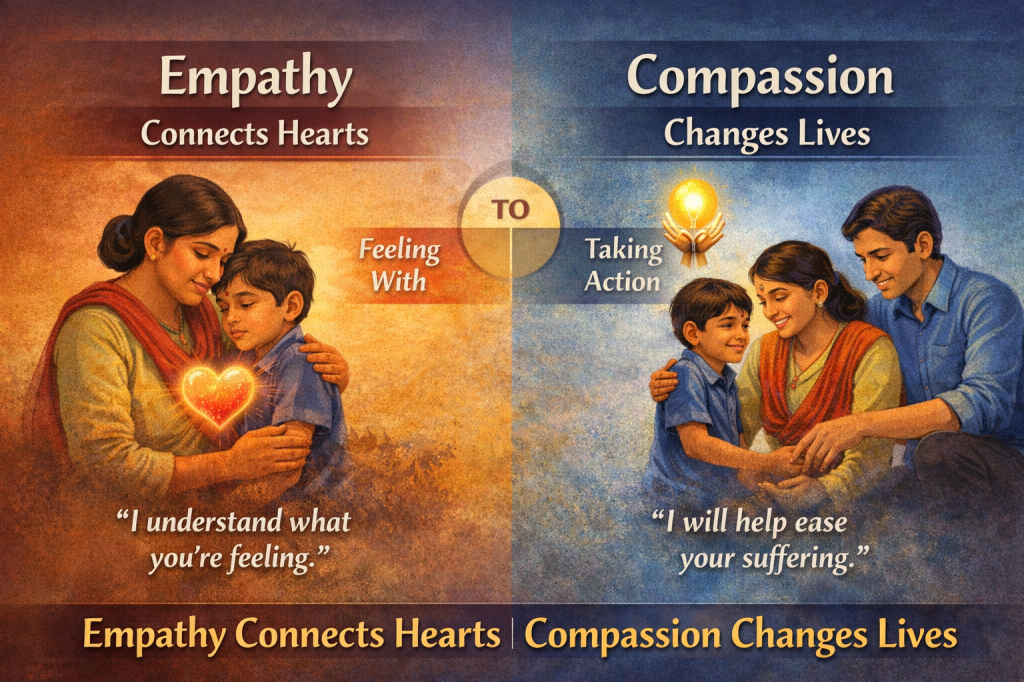
Empathy and compassion are closely related, yet they are not the same. Empathy is the ability to understand and feel what another person is experiencing. It helps us connect emotionally, recognise pain, and acknowledge another’s reality. When we empathise, we listen, relate, and say, “I understand how you feel.” This emotional connection is powerful, especially for children who have experienced loss, neglect, or trauma, as it assures them that their pain is seen and validated.
Compassion goes a step further. It begins with empathy but does not end there. Compassion involves a conscious decision to act in order to reduce suffering. It asks not only “What are you feeling?” but also “What can I do to help?” While empathy creates awareness, compassion creates responsibility. It transforms concern into care and feeling into purposeful action.
In the context of vulnerable children—particularly those in Child Care Institutions—empathy without action can unintentionally remain passive. Compassion, however, leads to consistent caregiving, timely decisions, protection from harm, and efforts to restore family life or create stable alternatives. It motivates systems, caregivers, and communities to intervene, heal, and support.
Message
Empathy connects hearts by building understanding and trust. Compassion changes lives by turning that understanding into meaningful, sustained action. Together, they form the ethical foundation of humane child protection, but it is compassion that ultimately creates safety, dignity, and hope for a better future.
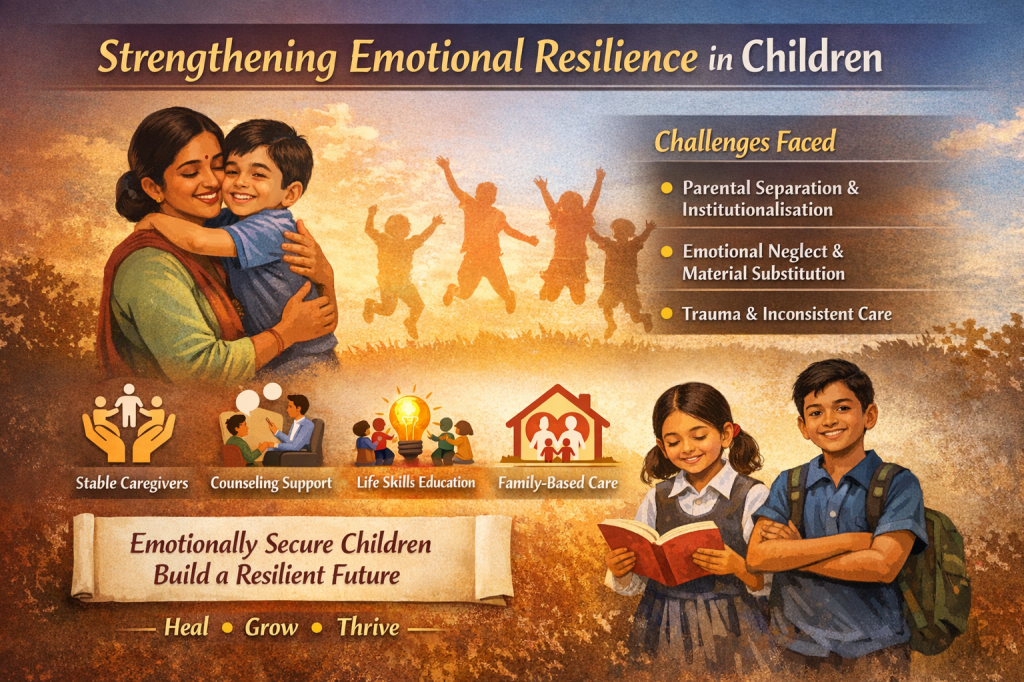
Emotional resilience is the foundation of a child’s ability to navigate stress, relationships, and change with confidence and stability. From early childhood, emotional experiences shape how children understand themselves, relate to others, and respond to adversity. In India, where family ties, cultural identity, and community relationships have traditionally provided emotional security, nurturing emotional well-being is as essential as ensuring physical health and education.
However, social and economic transitions have altered childhood experiences. Urbanisation, migration, demanding work schedules, and the gradual erosion of extended family support have reduced opportunities for consistent emotional engagement with children. Many children experience emotional neglect not due to lack of material resources, but because of limited time, attention, and meaningful interaction. In some households, affection is unintentionally replaced by material compensation, weakening emotional bonds and communication.
These challenges are significantly intensified for children living in Child Care Institutions (CCIs). Many such children have faced separation, abandonment, abuse, or instability before entering care. Without consistent caregiving and emotional support, unresolved trauma can affect their behaviour, learning, and social relationships. Strengthening emotional resilience in institutional settings therefore requires deliberate and structured interventions.
Indian child protection frameworks, including the Juvenile Justice (Care and Protection of Children) Act, 2015, emphasise that institutional care must be temporary and child-centred. Emotional resilience can be fostered through stable caregiver relationships, counselling services, life-skills education, and opportunities for participation and expression. Special attention is required for adolescents preparing for independent living.
Message
Emotionally resilient children are better equipped to heal, adapt, and thrive. Investing in caregiver training, parenting support, and family-based alternatives to institutional care is essential for nurturing emotionally healthy children and building a compassionate, resilient society in India.
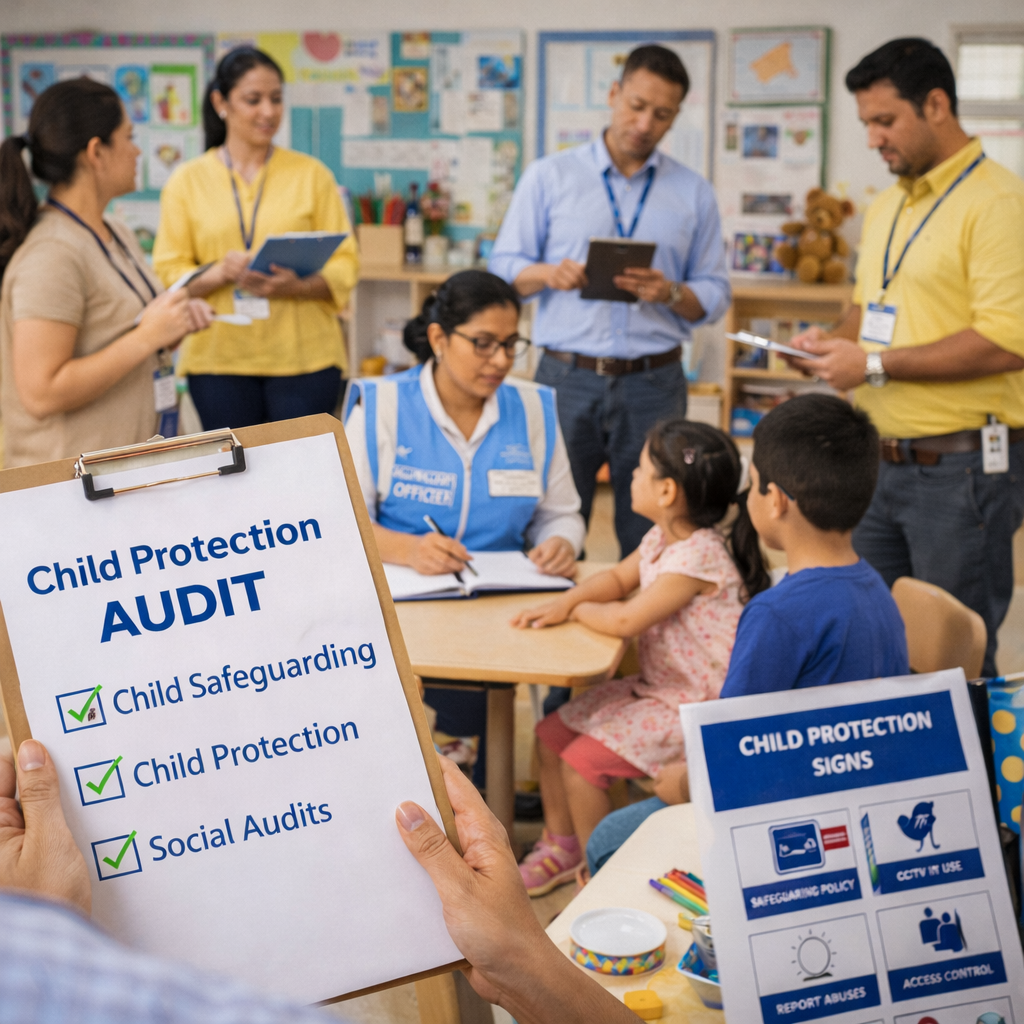
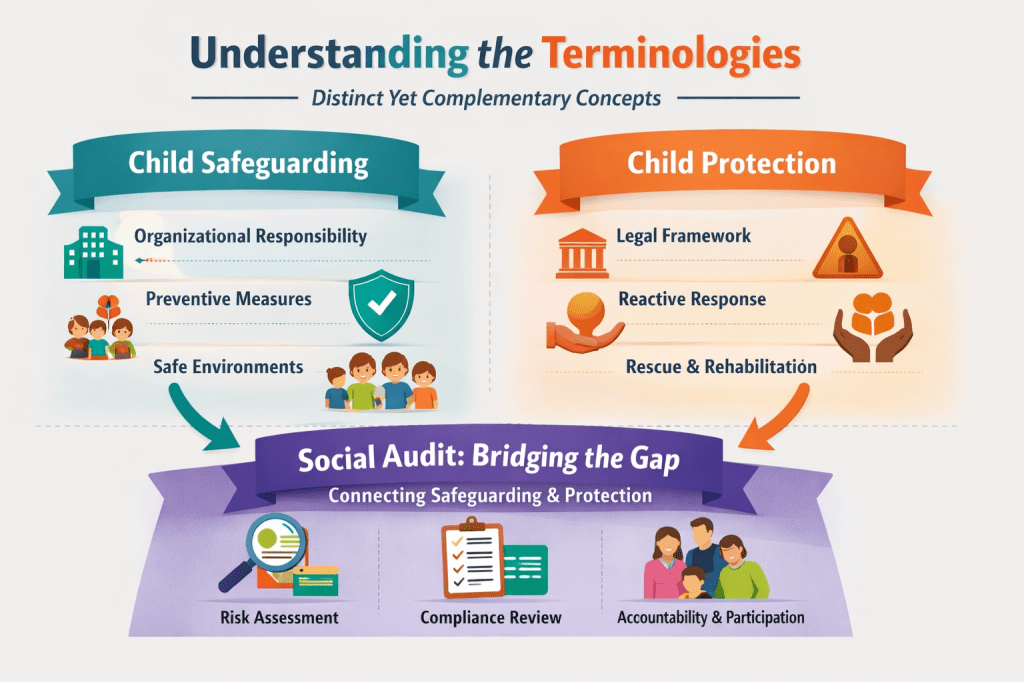
Child safeguarding, child protection audits, and social audits—although they may appear similar—serve distinct but complementary functions within the functioning of a Child Care Institution (CCI). Together, these three mechanisms—safeguarding, protection audits, and social audits—create a comprehensive framework that strengthens child protection and promotes a safe, nurturing, and accountable care environment.
Child safeguarding primarily relates to the responsibilities of organizations where children interact with adults, peers, and systems. These include Child Care Institutions (CCIs), schools, NGOs, faith-based organizations, sports bodies, and healthcare facilities. Safeguarding focuses on creating safe environments by ensuring that organizational structures, policies, staff conduct, and operational practices do not expose children to harm. A key feature of child safeguarding is internal accountability. Organizations are expected to establish clear reporting channels, standard operating procedures, and designated safeguarding personnel to ensure timely and appropriate responses to concerns, without relying solely on external authorities.
In contrast, child protection refers to the broader, state-led framework encompassing laws, statutory institutions, and response mechanisms designed to address abuse, neglect, exploitation, and violence against children across society.
Social audit plays a critical role in linking child safeguarding and child protection. As a proactive tool, it examines whether safeguarding commitments are effectively implemented and understood by staff and children. Simultaneously, it assesses compliance with child protection laws such as the Juvenile Justice Act, POCSO Act and various other progressive legislations. By reviewing both preventive measures and statutory obligations, social audit strengthens organizational accountability and reinforces the broader child protection system, ensuring children’s safety, dignity, and rights are upheld in practice.
Separation from parents and prolonged residence in Child Care Institutions (CCIs) significantly affect a child’s emotional security, development, and future well-being. Research and practice consistently show that young children require stable, continuous caregiving relationships to develop trust, regulation, and healthy attachment. When institutional care becomes prolonged, frequent caregiver changes and limited individual attention can deepen emotional distress and delay recovery.
In India, institutional placement often follows family crisis, poverty, or abandonment, yet case resolution and permanency planning are frequently delayed. Each additional month in institutional care reduces the child’s chances of forming secure attachments and increases vulnerability to behavioural and psychosocial difficulties. While CCIs may meet immediate safety and care needs, they are not designed to provide the permanence and emotional continuity that children require.
National and international child rights frameworks, including the Juvenile Justice Act, 2015, call for preventing unnecessary separation and prioritising family-based care. Policy focus must therefore shift toward early family support, timely decision-making, individualised care planning, and accelerated transitions to family environments to safeguard children’s rights and long-term outcomes.
Message
Children should remain in Child Care Institutions only for the minimum period necessary, while continuous efforts must be made to improve the quality of institutional care through standards, monitoring, and child-centred practices.
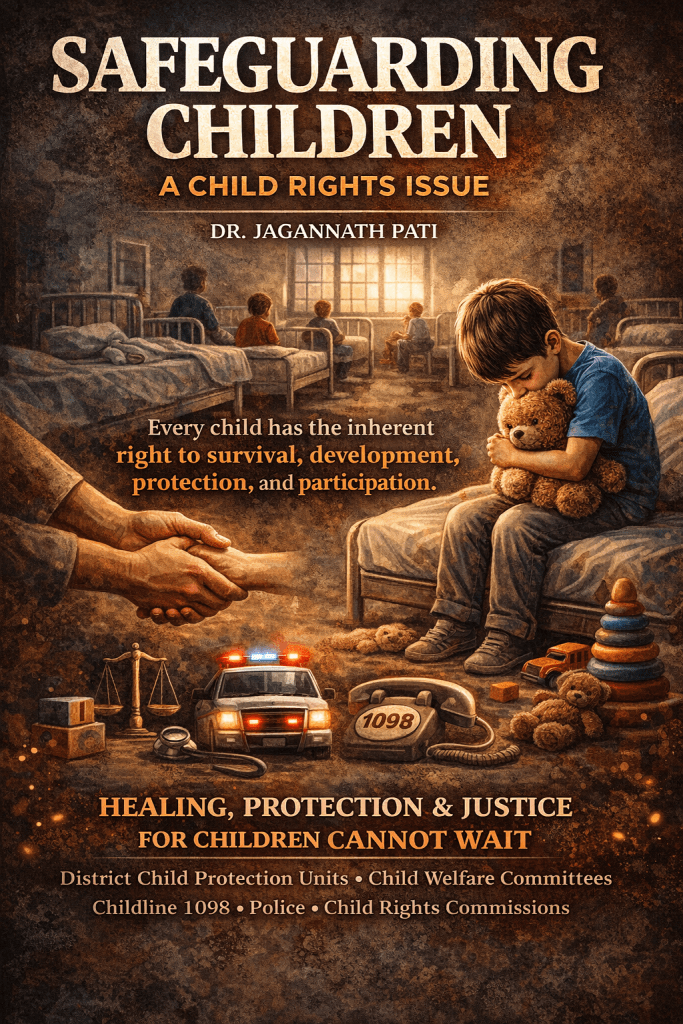
Safeguarding children is fundamentally a child rights issue anchored in the Constitution of India and the UN Convention on the Rights of the Child (UNCRC). Every child has the inherent right to survival, development, protection, and participation, and these rights must be ensured through responsive families, communities, and state systems. Childhood today is increasingly shaped by social vulnerabilities, migration, poverty, abuse, and neglect, making child protection an urgent national priority.
Children are uniquely vulnerable and depend on adults and institutions to protect their physical, emotional, and psychological well-being. When families or communities fail, the responsibility shifts to the child protection system to intervene promptly and ethically. India has established a robust legal and institutional framework through the Juvenile Justice Act, 2015, the POCSO Act, 2012, the RTE Act, 2009, and the Commission for Protection of Child Rights Act, 2005. These laws collectively affirm that children are rights-holders, not passive recipients of care.
Safeguarding children requires early identification of risk, prevention of abuse, timely reporting, and effective rehabilitation. Institutions such as District Child Protection Units, Child Welfare Committees, Childline 1098, police, and Child Rights Commissions must function in coordination and act without delay. A society’s commitment to child protection reflects its moral and democratic strength—because healing, protection, and justice for children cannot wait.



 Safe Childhood India