Category: Uncategorized
-
Meditation as a Tool for Emotional and Social Development in Children
Meditation offers significant benefits for children by supporting their emotional, cognitive, and social development holistically. It helps children become more aware of their thoughts and feelings, enabling better emotional regulation. Simple practices such as deep breathing and mindfulness can reduce anxiety, aggression, and stress, which is particularly important for children who have experienced trauma, neglect, or instability.
Regular meditation also improves attention, concentration, and memory, thereby enhancing learning outcomes and classroom behaviour. Children who practice mindfulness are better able to stay focused, manage distractions, and engage meaningfully in academic activities.
In addition, meditation promotes mental well-being by building self-confidence, resilience, and a positive self-image. It encourages calmness and improves sleep patterns, contributing to overall health. Socially, it fosters empathy, compassion, and cooperation, helping children develop stronger relationships with peers and caregivers.
For children in vulnerable situations, such as those in child care institutions, foster care, or adoption transitions, meditation can serve as a supportive tool for emotional healing and stability. It complements counselling and psychosocial interventions by creating a sense of inner safety.
Overall, meditation is a low-cost, scalable, and evidence-informed approach that can be integrated into education and child protection systems to promote holistic development and well-being.
-
From Anath to Child Rights: India’s Quiet Revolution in Protecting Vulnerable Children
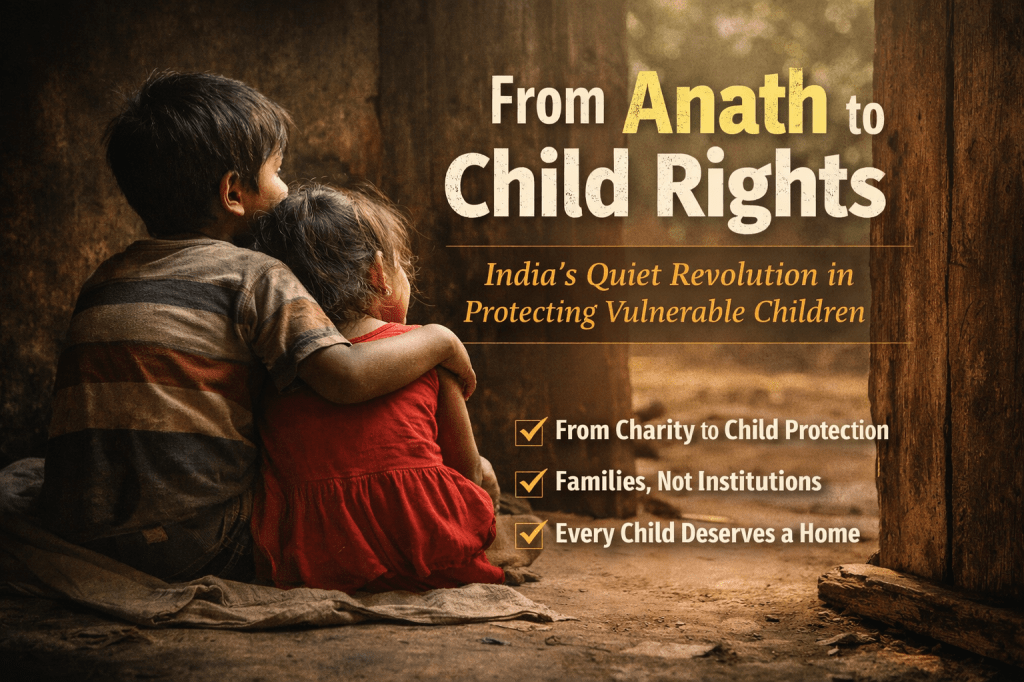
For centuries in India, a child without parents was simply called “Anath,”
The word carried both sorrow and compassion. It signified a child who had lost the protection of family and therefore deserved care from society. Communities, extended families, temples, and charitable institutions often stepped forward to help such children. Compassion, rather than law, was the primary safety net.But over the last few decades, something remarkable has happened.
India has quietly transformed its approach to vulnerable children—from a system rooted in charity and sympathy to one grounded in rights, law, and accountability. Today, the language has changed. Instead of Anath, the law now speaks of a “child in need of care and protection.”
This shift in language reflects something deeper: a transformation in how the nation understands its responsibility toward children.
-
Every care leaver deserves a future.

Every child deserves the love, protection, and belonging that a family provides. A nurturing family environment supports a child’s emotional, social, and psychological development and helps build confidence, identity, and resilience. For children who cannot remain with their biological families, family-based alternatives such as adoption, foster care, or kinship care are essential to ensure their well-being. However, many children grow up in child care institutions and face a difficult transition when they leave care at the age of eighteen.
Care leavers often encounter challenges such as limited education, unemployment, housing insecurity, and lack of social support. Therefore, a strong aftercare system is critical to prepare them for independent adulthood through education, vocational training, mentorship, financial literacy, and psychosocial support.
Mission Vatsalya must also establish a robust mechanism to capture and track information on such children before and after they exit institutional care. Systematic monitoring by Child Protection Units and institutions can ensure continuity of support, improve policy responses, and help care leavers build stable, dignified, and self-reliant futures.
-
A Third Pathway Model: Mentorship-Based Rehabilitation for Older Adolescents
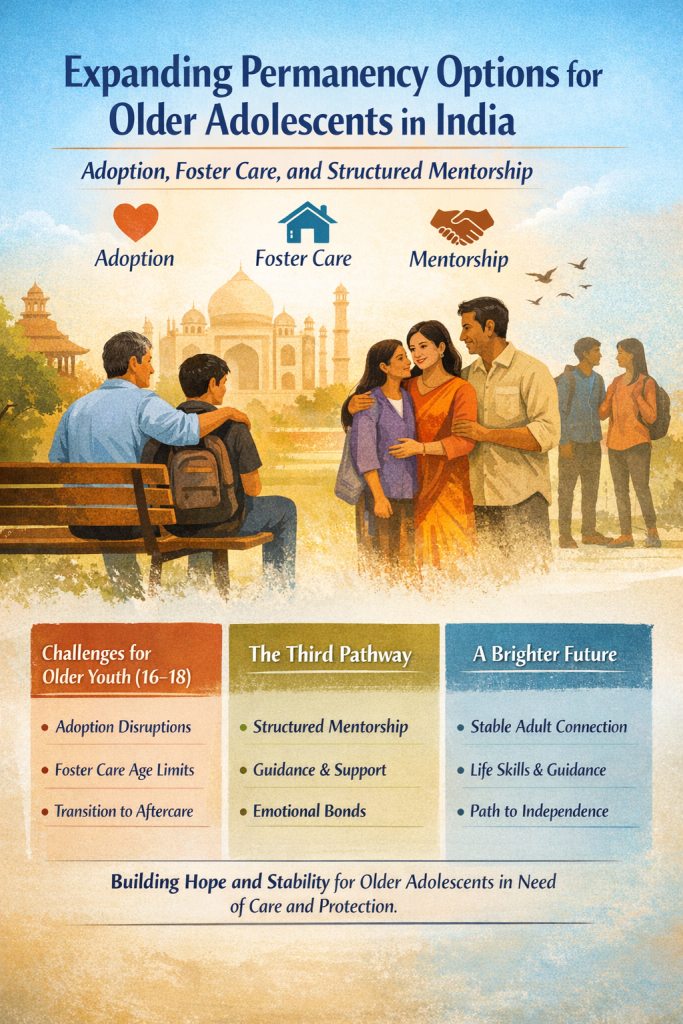
While the Juvenile Justice (Care and Protection of Children) Act, 2015, prioritises family-based rehabilitation, older adolescents face structural constraints.
Several countries have developed alternative permanency pathways for older adolescents who are unlikely to enter adoption. In India, adoption, foster care, and mentorship may need to be strategically strengthened to address the needs of Children in Need of Care and Protection (CNCP), particularly those aged 16–18 years.
Adoption referrals at this stage carry a higher risk of disruption due to adjustment challenges. In foster care, where a two-year stable placement may precede adoption consideration, the child may attain majority before eligibility is achieved. Additionally, prospective adoptive parents may exceed prescribed age criteria, limiting permanency outcomes.
To bridge this gap, a structured mentorship model may be introduced as a complementary rehabilitation mechanism. Screened and approved adult mentors could provide sustained emotional support, life guidance, and social capital without altering the child’s legal status.
A triadic permanency framework—adoption, fostering, and mentorship—would better serve older adolescents approaching adulthood by combining legal, relational, and hybrid models of stability.
-
When Care Turns into Family
In India, children in Child Care Institutions (CCIs) often hesitate to move into alternate family care due to emotional, social, and systemic realities. Under the Juvenile Justice (Care and Protection of Children) Act, 2015, institutionalisation is intended to be temporary, yet for many children, it becomes their lived stability. CCIs provide routine, schooling, peer networks, and a predictable environment. For adolescents, especially, the institution forms part of their identity and social world.
Often, older children refuse to leave the CCI for alternate family care. Fear of rejection is central. Many have already endured abandonment, neglect, or disrupted attachments. Entering foster care or adoption can feel like risking another loss. In the Indian context, caste, religion, language differences, and social stigma around adoption deepen this hesitation. Some children also carry loyalty toward biological parents who promise reunion, creating emotional conflict.
The phrase “the blood of the covenant is thicker than the water of the womb” reframes this reality. It suggests that relationships built on conscious commitment, care, and responsibility can be stronger than biological ties alone. Attachment grows from consistent love and trust. Through thoughtful transition planning under Mission Vatsalya, covenant-based families can offer not just placement, but belonging, dignity, and enduring security.
Thus, each placement must be carefully planned with structured counselling and gradual preparation. For a child who has already experienced loss or neglect, moving into foster care or adoption can trigger fear, anxiety, and attachment concerns. Pre-placement counselling should address emotional readiness, loyalty conflicts toward biological parents, and realistic expectations of family life. Foster and adoptive parents must also be prepared to understand institutionalisation trauma and adolescent adjustment. Supervised visits and phased transitions help build trust. When counselling is integrated into the process, placement becomes a supported emotional journey rather than a sudden transfer, ensuring stability and long-term well-being.
-
I am not alone.
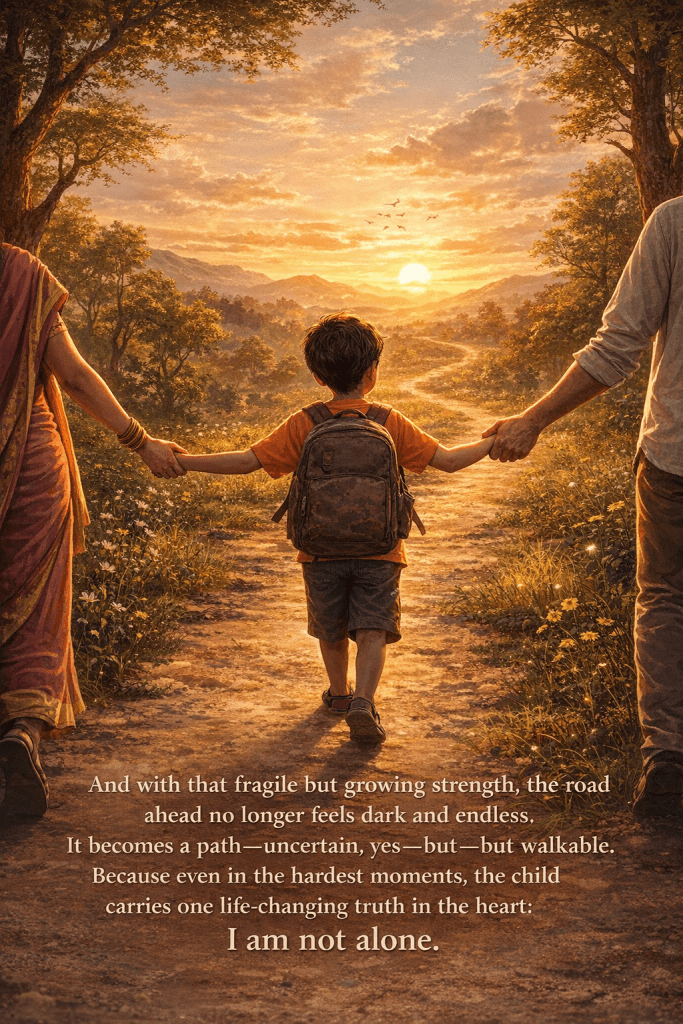
When a child knows, deep inside, “I am not alone,” something tender but powerful awakens within them. The tightness in the chest slowly loosens. The silence that once felt heavy begins to soften. Fear does not disappear overnight, but it no longer feels endless.
To feel accompanied — truly accompanied — is to feel seen in one’s pain and still accepted. It is to cry without shame. It is to struggle without being abandoned. It is to fall and know that someone will help you stand again. That quiet assurance becomes an anchor in the storm.
From that sense of belonging, resilience is not forced; it gently grows. It grows in the way a small plant reaches toward sunlight. It grows because love, attention, and steady presence nourish it. A child who feels supported dares to hope again. Dares to trust again. Dares to dream again.
And with that fragile but growing strength, the road ahead no longer feels dark and endless. It becomes a path — uncertain, yes — but walkable. Because even in the hardest moments, the child carries one life-changing truth in the heart: I am not alone.
-
Inter-generational trauma
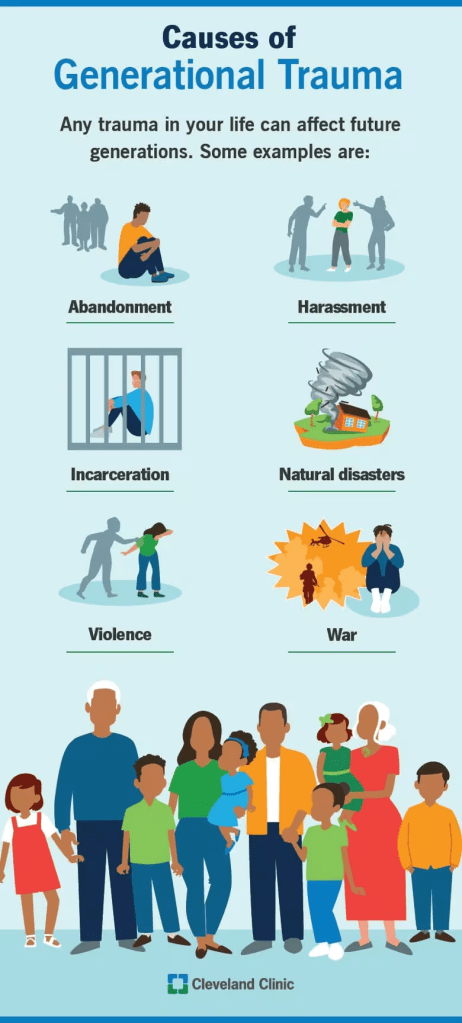
Intergenerational trauma refers to psychological and emotional wounds that are transmitted from one generation to the next when trauma remains unaddressed. Experiences such as abandonment, neglect, violence, poverty, substance abuse, displacement, or prolonged institutionalisation alter a caregiver’s emotional responses and coping mechanisms. Children raised in such environments absorb fear, insecurity, and distress, even if they have not directly faced the original trauma. Over time, these patterns repeat, creating cycles of vulnerability across generations.
The Juvenile Justice (Care and Protection of Children) Act, 2015 provides a legal framework to interrupt this cycle. Under Section 2(14), Children in Need of Care and Protection include those who are abandoned, neglected, abused, or living in vulnerable family conditions—the very contexts through which intergenerational trauma is transmitted. The Act empowers Child Welfare Committees to assess each child’s best interests and order care, counselling, protection, and rehabilitation.
Crucially, the JJ Act prioritises family-based and non-institutional care—adoption, foster care, sponsorship, and aftercare—over long-term institutionalisation. These measures provide stable, nurturing environments essential for emotional healing. Provisions for counselling and aftercare up to 21 years (extendable to 23) ensure continuity of support. In this way, the JJ Act is not only responsive to immediate harm but also preventive, ensuring that trauma does not become a legacy passed from one generation to the next.
-
Technology cannot dilute accountability.
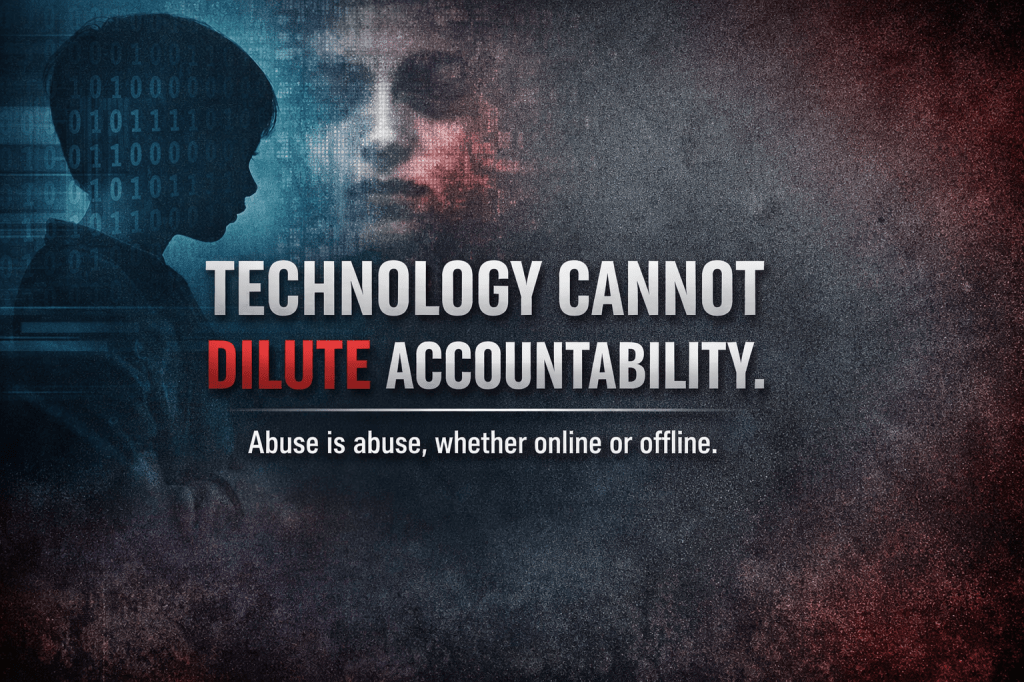
Deepfake abuse of children in India is a grave violation of child rights and must be treated as serious abuse and sexual exploitation, not as a mere cyber offence. Digital manipulation of a child’s image, voice, or likeness into sexualised, obscene, or degrading content causes real and enduring harm. Such acts violate the child’s dignity, privacy, bodily autonomy, and mental well-being, leaving long-term psychological and social consequences.
India’s existing legal framework adequately covers such abuse. The Protection of Children from Sexual Offences (POCSO) Act, 2012 criminalises sexual harassment and the use of children for pornographic purposes, irrespective of whether the content is real or fabricated. The Information Technology Act of 2000 (Sections 66E, 67, and 67B) penalises violations of privacy and the creation or transmission of child sexual abuse material, including digitally altered content. Under the Juvenile Justice (Care and Protection of Children) Act, 2015, children subjected to deepfake abuse qualify as Children in Need of Care and Protection, requiring immediate care, counselling, and rehabilitation.
Mandatory reporting obligations apply, and CWCs, SJPUs, cyber cells, and DCPUs must ensure swift takedowns, investigations, and victim-centered support. Technology cannot dilute accountability. In India, deepfake abuse is abuse, and the child’s best interests must remain paramount.
-
Dalma is a traditional curry from Odisha, India, prepared with mixed vegetables and lentils. Cooked with minimal oil and mild seasoning, it is highly nutritious, rich in vitamins, and known for its simplicity and health benefits.


 Safe Childhood India